The Best Cabinet and Drawer Locks to Baby-Proof Your Home

This post may contain affiliate links. Read our policy.
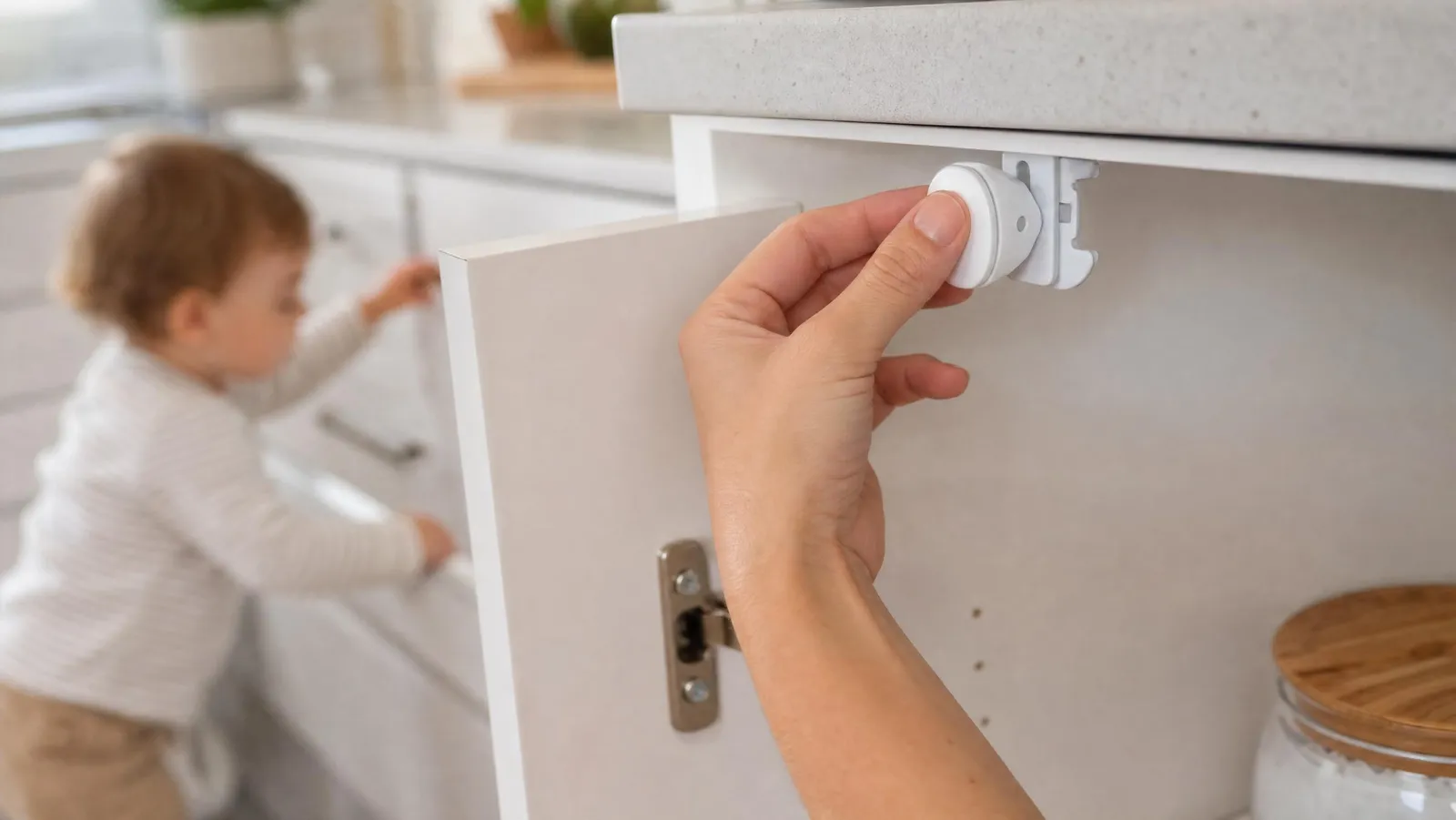
The cabinet under my kitchen sink holds the dish soap, the dishwasher pods, and a spray bottle of cleaner. It is also the most fascinating place in the house, apparently, because the week my youngest learned to pull a door open, that is exactly where he headed: both hands, no hesitation. I got there first. Then I ordered locks that same night.
If you are eyeing that same cabinet, here is the short version. Some of the links below are affiliate links, and we may earn a small commission — at no extra cost to you — if you buy through them. The best baby proofing cabinet locks are the ones that match what you are actually locking: magnetic locks for a whole kitchen, adhesive latches for odd shapes and appliances, and U-shaped sliding locks for double knobs.
Cabinet and drawer locks are one of the highest-value moves in how to baby-proof your home, because they stand between a crawling baby and the two things most likely to send a family to the ER: cleaning products and medicine. Below I will walk through the lock types, when each one fits, and the five I would actually put on my own cabinets.
Why baby proofing cabinet locks matter more than you think
The under-sink cabinet is not just messy real estate. It is usually the lowest, easiest-to-reach spot in the house, and it tends to hold the most dangerous stuff. According to the Consumer Product Safety Commission, safety latches and locks on cabinets and drawers help prevent children from getting to medicines, laundry detergent, household cleaners, matches, and sharp objects like knives.
The numbers back up the worry. In Poison Control's 2020 national data, household cleaning substances (11.3%) and pain relievers (7.6%) were among the top five exposures for children age five and under. And these are not freak accidents in absent households. The American Academy of Pediatrics points out that most childhood poisonings happen at home, often while a parent or caregiver is nearby but distracted, with young children most commonly exposed to medicines and household products.
That "nearby but distracted" line is the whole reason locks exist. You cannot watch a toddler every second, and you should not have to. A good latch is the guardrail that covers the ten seconds you look away to answer the door.
One honest caveat before we shop. No lock is a substitute for smart storage. Both the CPSC and the AAP recommend keeping medicines and household chemicals in their original child-resistant packaging, stored up high, out of sight, in a locked cabinet. Latch the under-sink cabinet, yes, but move the medicine and the strongest chemicals to a high cabinet a child cannot reach even on a good day.
How to choose: match the lock to the cabinet
There is no single best lock, only the best lock for a particular door. Here are the main types of child safety cabinet locks and where each one earns its keep.
- Magnetic locks mount hidden inside the cabinet and release with a magnet key. They are invisible, clean-looking, and ideal for a whole kitchen of matching doors and drawers. They need a cabinet with enough of a lip to hold the latch.
- Adhesive strap latches stick to the cabinet and the frame and flex to fit almost anything, including curved fronts and appliances. They are the flexible workhorse when a magnetic lock will not fit.
- U-shaped sliding locks clamp over two adjacent knobs or handles. No tape, no tools, no marks. Perfect for double doors and side-by-side drawer pulls.
- Appliance and fridge locks are heavier-duty adhesive latches built for the fridge, freezer, and oven, where a light cabinet latch would not hold.
- Decoy-button straps are for the escape artist who has already cracked your other latches. A dummy button fools the toddler while the real release hides in plain sight.
Most families I know use two or three of these, not one. Your kitchen probably has a mix of flush doors, knobbed doors, drawers, and a fridge, and no single style covers all of them. With that map in mind, here are my picks.
Where to start: the cabinets that matter most
You do not have to lock every door in the house on day one, and honestly, trying to will just burn you out. Work in order of danger and you will cover the real risks in a single afternoon.
- The under-sink cabinet, first, always. It is low, it is central, and it usually holds dish soap, dishwasher pods, and spray cleaners. This is the one that sent me shopping at midnight.
- Anywhere medicine lives. A bathroom vanity or a low pantry shelf with vitamins, pain relievers, or prescriptions is a top priority. Better yet, move those items to a high cabinet and latch it too.
- The laundry area. Detergent, especially the brightly colored liquid packets, is a serious hazard for little hands and mouths. Latch the cabinet or shelf where it lives.
- The trash cabinet and the fridge. Both are toddler magnets full of choking hazards and spoiled-food risks, and both are usually the next doors a determined crawler tries.
- The garage or utility closet. Antifreeze, pesticides, and paint thinner belong up high and behind a lock, well out of a child's world entirely.
Everything else, the pots-and-pans drawer, the plastic-container cabinet, is a "nice to have." Let your baby have a safe cabinet or two to bang around in. It keeps them busy while you lock down the doors that count.
The best baby proofing cabinet locks, by type
Magnetic cabinet locks: the invisible whole-kitchen option
If you want your kitchen to still look like a kitchen, magnetic cabinet locks are the move, and the Vmaisi 20 Pack Magnetic Cabinet Locks are my overall pick. You get twenty locks and two magnet keys, enough to do an entire kitchen and then some, and everything mounts inside the cabinet with 3M adhesive. That means no drilling and nothing on the outside for a toddler to grab, pry, or even notice. At around 40 dollars for the set as of July 2026, the per-lock cost is genuinely low.
Two things to know. First, hold on to those magnet keys. Stick one high on the fridge with a bit of tape so it is always where you expect it. Second, if a door will not latch, check for a stray metal screw or nail inside it. A ferrous bit of hardware can pull the magnet off course, so reposition the lock before you press the adhesive down for good.
Adhesive cabinet latches: the flexible workhorse
Not every cabinet will take a magnetic lock, and that is where adhesive cabinet latches shine. The Nuby Multi-Use Child Safety Locks come eight to a pack and attach to both flat and curved surfaces, so they handle the awkward doors, the fridge, and appliances that a rigid lock cannot. The strap adhesive is strong but removes cleanly, and Nuby states its products are made to exceed government safety regulations. At about 12 dollars a pack as of July 2026, they are an easy add-on to fill the gaps a magnetic set leaves behind.
U-shaped sliding locks: best for knobs and double doors
For any cabinet or drawer with two knobs or handles sitting side by side, nothing beats a U-shaped slider for speed. The TERDEWE 4-Button U-Shaped Cabinet Locks clamp over two knobs up to about 5.6 inches apart, and they use no tape, no tools, and no drilling at all. That means zero marks on your cabinets, which makes them my top recommendation for renters and for anyone who wants to reposition locks as their kid grows. Ten to a pack at roughly 10 dollars as of July 2026, they take about ten seconds each to fit. These are also handy baby proofing drawer locks wherever your drawers happen to have paired pulls.
Best for the fridge and appliances
The fridge is often the first door a toddler conquers, and it needs a latch tougher than a standard cabinet lock. The 4our Kiddies Child Proof Refrigerator Locks are built for exactly that, with durable ABS bodies and strong 3M adhesive sized for the fridge, freezer, oven, and closets. Adults open them with a one-hand button-and-twist, and when you are done with them, a hairdryer or a piece of dental floss lifts the adhesive without leaving marks. Two locks per pack at around 6 dollars as of July 2026 is a small price to end the daily fridge raids.
Best decoy-button strap for the little escape artist
Some kids watch you open the latch once and simply copy you. When that day comes, the Safety 1st OutSmart Multi-Use Strap is my answer. It puts a big, obvious decoy button front and center, the one your toddler will mash with total confidence, while the buttons that actually release the strap hide on the flexible surface. It installs with no drilling and pivots out of the way when you do not need it locked. It is an inexpensive, satisfying way to outsmart a kid who has already outsmarted everything else.
How to install cabinet locks so they actually hold
Every pick here is a no-drill install, but adhesive locks live or die by prep. Skip the prep and you will find a "locked" cabinet swinging open a week later.
Start by wiping each mounting surface with rubbing alcohol and letting it dry completely. Kitchen cabinets carry a thin film of cooking grease that quietly wrecks adhesive, and that film is invisible until a latch pops off in your hand. Once the surface is clean and dry, peel the backing, press the lock firmly into place, and hold it for a slow count of thirty.
Then the hard part: walk away. Most 3M-style adhesives need a curing window, often a full day, before they reach full strength, so resist the urge to slam-test the cabinet the moment it is on. Give it overnight, then check every latch by pulling the way a toddler would, with steady, stubborn force rather than a single tug.
U-shaped sliding locks skip all of this, which is part of their charm. You just slide them over two knobs and you are done, no cure time and no cleanup. And whatever style you choose, get in the habit of re-latching the moment you close the door. A lock left open does exactly nothing.
Locks are one layer, not the whole plan
A latched cabinet is a big win, but the kitchen sits inside a bigger safety picture, and the most serious hazards in a home are rarely behind a cabinet door. This is the moment to also anchor your heavy dressers and TVs, because a toddler who cannot open a cabinet will happily try to climb one, and tip-overs are among the most dangerous hazards in any home.
It is also worth thinking about the room as a whole. If your kitchen is wall-to-wall temptation, sometimes the simplest fix is to keep the crawler out entirely with the right baby gate across the doorway while you cook. Locks slow a child down at each cabinet; a gate removes the whole room from the equation when you need both hands free.
And remember that any latch is only as good as your habits with it. The CPSC is blunt that no device is completely childproof, that determined toddlers have defeated safety devices, and that latches only work if they are properly installed and re-engaged every single time you close the door. The AAP agrees, noting that self-locking latches help but that there is always a chance the device malfunctions or the child defeats it. Treat locks as one calm, reliable layer, not a reason to stop paying attention.
The bottom line
Buy for the doors you have, not for a generic idea of a kitchen. My default plan looks like this: run the magnetic Vmaisi locks across the main run of cabinets and drawers for that clean, invisible finish, fill the curved doors and appliances with Nuby adhesive latches, slide TERDEWE U-shaped locks over any double knobs, put a heavy-duty 4our Kiddies latch on the fridge, and keep a Safety 1st OutSmart strap in reserve for the day your toddler gets clever. Move medicines and the strongest chemicals up high and locked, and you have covered the real risks.
For the rest of the house, from furniture anchors to outlet covers to the nursery, walk through our complete room-by-room baby-proofing guide and knock it out one room at a time. Get the cabinets right first, though. It is a single afternoon, a few dollars a latch, and it buys back the one thing every parent of a new crawler is short on: the freedom to look away for ten seconds. You have got this.
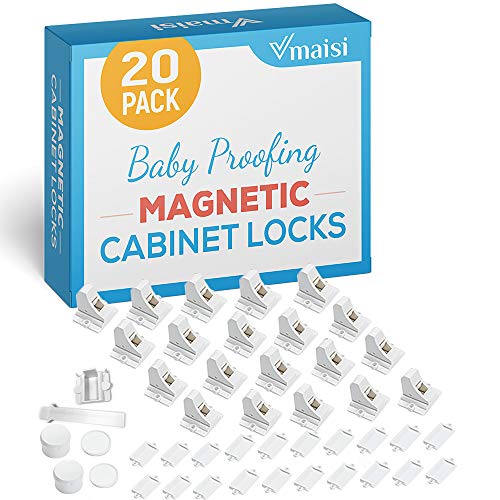
Vmaisi 20 Pack Magnetic Cabinet Locks (with 2 Keys)
Twenty magnetic locks and two magnetic keys that work on both cabinet doors and drawers. Everything mounts inside the cabinet with 3M adhesive, so there are no tools, no drilling, and nothing visible on the outside once installed. You hold the magnet key against the door to release the latch, and the hold is strong enough to keep determined toddlers, and curious pets, out. One install tip worth knowing: a ferrous metal screw or nail hidden inside the door can interfere with the magnet, so reposition the lock before you stick it down.
- Brand
- vmaisi
- Category
- Our Pick
I liked that there is nothing on the outside for my toddler to even notice. She cannot grab what she cannot see.

Nuby Multi-Use Child Safety Locks (8 Pack)
Eight adhesive strap latches that work on cabinets, drawers, the refrigerator, and appliances. The universal design attaches to both flat and curved surfaces, so you are not stuck with only perfectly square cabinet faces. The adhesive is strong but removes cleanly without damage, and no tools are required. Nuby states its products are manufactured to exceed government safety regulations.
- Brand
- Nuby
- Category
- Best Adhesive Latch
These stuck to my curved cabinet fronts where nothing else would hold, and they peeled off clean when we rearranged the kitchen.

TERDEWE 4-Button U-Shaped Cabinet Locks (10 Pack)
Ten U-shaped sliding locks that clamp over two adjacent knobs or handles and slide shut. They are adjustable and fit handles or knobs up to about 5.6 in (14.2 cm) apart. There is no tools, no drilling, and no adhesive, so they leave no marks and are fully reusable, which makes them a smart choice for rentals. They are made of ABS plastic and use a press-style mechanism that adults open by following the instructions.
- Brand
- TERDEWE
- Category
- Best for Knobs & Handles
No adhesive, no holes. I slid these over our knobs in about ten seconds each and moved them around until every double cabinet was covered.
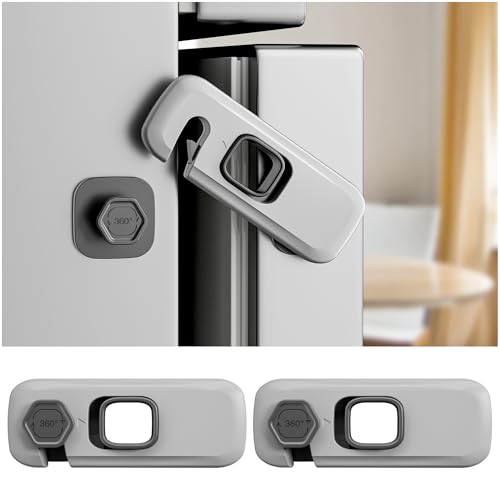
4our Kiddies Child Proof Refrigerator Locks (2 Pack)
Two adhesive latches built for refrigerators, freezers, ovens, cabinets, and closets. They are made of durable ABS with a strong 3M adhesive that grips smooth surfaces, and adults release them with a one-hand button-and-twist motion. When you are ready to take them off, a hairdryer or a length of dental floss lifts them without leaving marks, which is a genuinely renter-friendly touch.
- Brand
- 4our Kiddies
- Category
- Best for Fridge & Appliances
Our fridge was the very first thing our son learned to open, and these finally ended the great yogurt raids of last spring.

Safety 1st OutSmart All-Purpose Multi-Use Strap (4 Pack)
A strap with a prominent decoy button a child can press all day with no effect, while the functional release buttons stay hidden in plain sight on the flexible surface. It installs with no drilling and pivots out of the way during periods when you do not need it locked. It is an inexpensive, clever option for the toddler who has already figured out your other latches.
- Brand
- Safety 1st
- Category
- Best Decoy-Button Strap
My oldest cracked every latch we owned, but the decoy button had her completely fooled for months.
- 01vmaisiOur PickVmaisi 20 Pack Magnetic Cabinet Locks (with 2 Keys)
- 02NubyBest Adhesive LatchNuby Multi-Use Child Safety Locks (8 Pack)
- 03TERDEWEBest for Knobs & HandlesTERDEWE 4-Button U-Shaped Cabinet Locks (10 Pack)
- 044our KiddiesBest for Fridge & Appliances4our Kiddies Child Proof Refrigerator Locks (2 Pack)
- 05Safety 1stBest Decoy-Button StrapSafety 1st OutSmart All-Purpose Multi-Use Strap (4 Pack)
Are magnetic cabinet locks better than adhesive latches?+
Do cabinet locks damage your cabinets?+
What kind of lock works best on drawers?+
Are cabinet locks truly toddler-proof?+
How do I install cabinet locks without drilling?+
Where should I store medicines and cleaning products?+
Sammie Seelbach
Sammie is a mom of two and the lead reviewer at Smart Baby Reviews. Since becoming a parent she has become obsessed with researching the safest, smartest baby gear on the market — testing thermometers at 2 a.m., wrangling baby gates, and sterilizing more bottles than she can count. She shares what actually works so other parents can make confident, informed decisions for their little ones.